
Improving rural health access: A pilot study
By Lisa Lavin
For many older adults in rural Minnesota, taking medication correctly is harder than it should be. About three in four adults 65 and older take five or more medications, and roughly half do not take them as prescribed. In small towns, the challenge is compounded by distance. Nearly 80% of rural America is designated medically underserved, and 46% of U.S. counties have at least one pharmacy desert, affecting about 15.8 million people.
When a pharmacy closes or the nearest clinic is 30 miles away, the effects add up quickly. Patients skip refills, stretch doses or delay care until a problem becomes an emergency. Emergency departments are the most expensive place to receive care, so the cost falls on patients, families, rural hospitals and payers alike. Rural residents are older on average and have higher rates of diabetes, hypertension and obesity, which means those who need consistent care the most often have the least access to it.
Managing medication is hard work. Sorting pills, remembering what to take when and tracking changes after a hospital visit can challenge even sharp, independent seniors, and vision changes, arthritis or mild memory loss make a schedule harder to follow. Caregivers are stretched, too. The ratio of caregivers to seniors is falling from about seven to one toward four to one, and rural families often live far from the people they help. Doing more of the same will not close the gap. There are not enough caregivers, and pharmacies and clinics keep closing in rural communities, so care has to be delivered differently. Technology can help bridge the gap.
Read the full article from Minnesota Physician on page 20 here.

Seniors: Live where you choose, longer
Seniors: Live where you choose, longer
By Lisa Lavin, CEO
At Ōmcare, our mission is to help people over age 65 live where they want to live, longer. It’s in all our material and in conversations with clinicians and partners. It is central to everything we do.
But a phrase you repeat every day can quietly lose its meaning. So, I’ve been asking myself a simple question: What does living where you choose, longer, actually mean to the people living it?
Here’s where I’ve landed. It’s not a policy term, it’s just life.
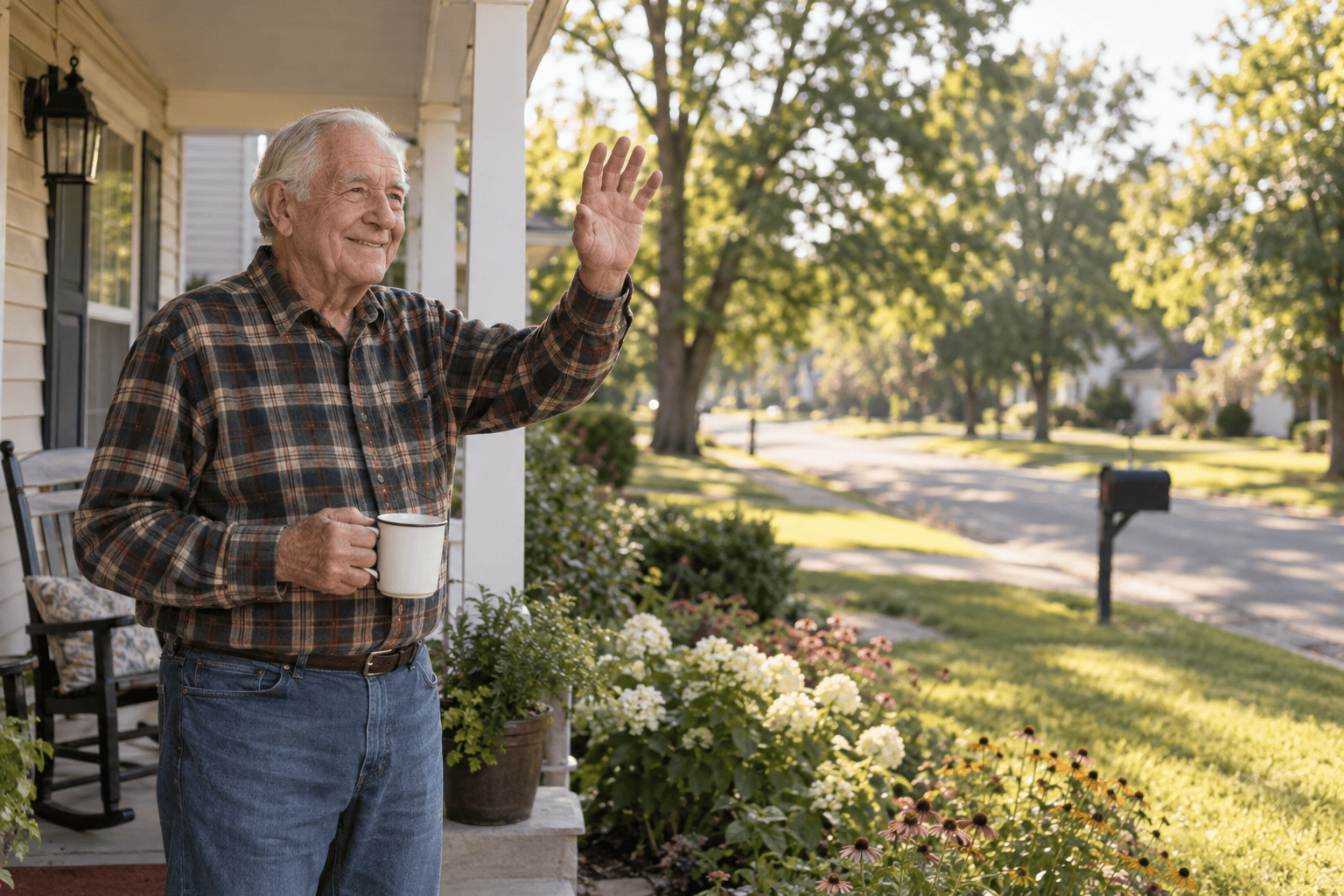
It’s the life someone has built and is continuing on their own terms. It’s their kitchen that they know by heart, the neighbor who waves from the porch each morning, the Tuesday coffee group and the garden that always needs tending. It is dignity, choice, routine, connection and independence, held together for as long as possible.
What people tell us they want
The desire to stay home isn’t a niche preference, it’s nearly universal.
At least 75% of adults 50 and older said they want to remain in their current home as long as possible, and 73% want to stay in their community, according to AARP’s 2024 Home and Community Preferences Survey.
That desire is even stronger among people age 65 and older and also for those living in small towns and rural areas,
But what jumps out at me most is the gap between someone wanting to remain in their home and being ready to actually do that. In that same survey, 43% said they’d need to modify their home to keep living there and 64% said they want a medical emergency response system.
People aren’t asking to be rescued, they’re just asking for a little help maintaining stability.
Five words that matter
When you ask people what living where they choose means to them, five motivations usually come up. And each one looks very different in a real home.
Dignity
A retired schoolteacher managing her own heart medications instead of having a stranger count pills into her hand. It’s being trusted with your own life.
Choice
The 84-year-old man who remains in his home, adapting it to his needs, rather than moving somewhere else. Good care bends to the person, not the other way around.
Routine
The morning coffee, the crossword and the daily walk to the mailbox. For many older adults, especially those living with early memory changes, routine isn’t just a habit. It’s the scaffolding that keeps the day standing.
Connection
The daughter three states away who gets a quiet reassurance that Mom took her medication, so their nightly call can be about the grandkids instead of a health checklist.
This is a big one. Social disconnection raises the risk of premature death to a level comparable to smoking up to 15 cigarettes a day, according to the U.S. Surgeon General’s 2023 advisory. That isolation among older adults drives an estimated $6.7 billion in excess Medicare spending every year.
Independence
The widow who can still live alone in her home because the smaller risks like a missed medication dose, a fall or a night when something feels off are covered by a safety net she barely notices.
Technology to support, not replace
Ōmcare focuses on medication adherence. Here’s why it matters:
Roughly half of patients with chronic conditions don’t take their medications as prescribed.
In the U.S., nonadherence is associated with about 125,000 deaths a year, at least 10% of hospitalizations and $100 billion to $300 billion in avoidable spending per year.
Physicians often treat medication nonadherence as a patient problem rather than a health-system problem, researchers have noted.
Behind those numbers are ordinary and very real moments.
A dose missed because the label was confusing.
A pill taken twice because yesterday blurred into today.
A refill missed because the pharmacy is 40 minutes away and the roads iced over.
Each one could be relatively small, but together, they are often the difference between staying home and moving out.
This is where technology can shine. It can offer a reminder that arrives at the right moment, a dispenser that makes the right dose easy and the wrong dose hard and a gentle alert to a family member or nurse when something is actually off.
Done well, none of this feels like surveillance, but more of a steady hand.
To be clear: Technology cannot and should not replace human care. A device can tell a nurse that a dose was missed, but it can’t ask why, notice the grief in someone’s voice or sit at the kitchen table and listen. The best health technology quietly helps people live the lives they already want, and it makes the humans in their lives more effective, not less necessary.
Rural America: where staying home is hardest
For anyone who needs a demonstration of what living where you choose truly asks of us, visit rural America. About 15% of Americans overall live in rural counties, but 22% of Americans over age 65 live in rural areas.
At the same time, the care around them is evaporating. Since 2010,182 rural hospitals have closed or stopped offering inpatient care. That is roughly 10% of the nation’s rural hospitals. Nearly half (46%) now run at a negative operating margin and at least 432 are considered vulnerable to closure.
For an older adult in a small town, that math is personal. It means a longer drive to a pharmacy and even further to get to a pharmacist who knows your name when they see you.
It means a home health nurse covering an entire county instead of a neighborhood and family caregivers stretched across distance and jobs. In these places, a missed dose or an unnoticed decline isn’t a minor event. It can be the first step toward permanently leaving home.
That’s exactly why rural communities are where thoughtful technology can do the most good. However, tools built for a city apartment with fast wi-fi and a clinic right down the block won’t always work reliably for a farmhouse at the end of a gravel road. Rural seniors deserve technology designed for their reality.
What policy can do next
We’re at a rare moment for rural health. The federal Rural Health Transformation Program is distributing $50 billion to all 50 states over five years, $10 billion a year from 2026 through 2030, with first-year awards ranging from $147 million to $281 million. Its stated goals include expanding access, strengthening the rural workforce and modernizing technology and care models. Provider groups have welcomed the funds while cautioning that they don’t offset projected Medicaid reductions in the same law.
How states spend this money will shape rural aging for a generation. At Ōmcare, we believe a few principles should guide it:
- Measure success by days at home. Fund programs by whether they help people stay safely in their own homes and communities, not only by the number of devices deployed or visits logged.
- Pay for the human-plus-technology model. Reimbursement should reward nurses, pharmacists and community health workers who use remote tools to reach more people, so technology extends caregivers rather than replacing them.
- Design for rural from the start. Require that funded tools work on limited broadband, are easy for people with low vision or arthritis to use and are tested with rural older adults themselves.
- Treat medication management as core care. Adherence support is one of the most direct, measurable ways to prevent avoidable hospitalizations. It should be centered in state plans, not on the margins.
- Support family caregivers. They are the backbone of helping people live where they choose. Give them training, respite and tools that reduce worry rather than add another app to check.
I believe industry leaders have a responsibility to bring what we see in real homes into policy conversations honestly and with older adults at the center of the table.
Back to the kitchen table
“Live where you choose, longer” is the phrase I’ll keep saying, because it names what the people we serve actually want. And I try to hear it the way they live it: as the morning coffee, the garden, the neighbor’s wave and the right to decide for yourself how your days unfold.
Our job in technology, in care and in policy isn’t to redesign lives. It’s to protect them, quietly, and for as long as possible. If we get that right, the best compliment our work can receive is that people barely notice it’s there.
This at-home pill dispenser could help fill rural Minnesota’s pharmacy gap
Bloomington-based startup Omcare is studying if the device helps keep older adults on their medication schedule.
A Bloomington startup is testing whether its interactive prescription drug dispenser can help older Minnesotans take their medications on schedule — especially in rural areas that lack pharmacies.
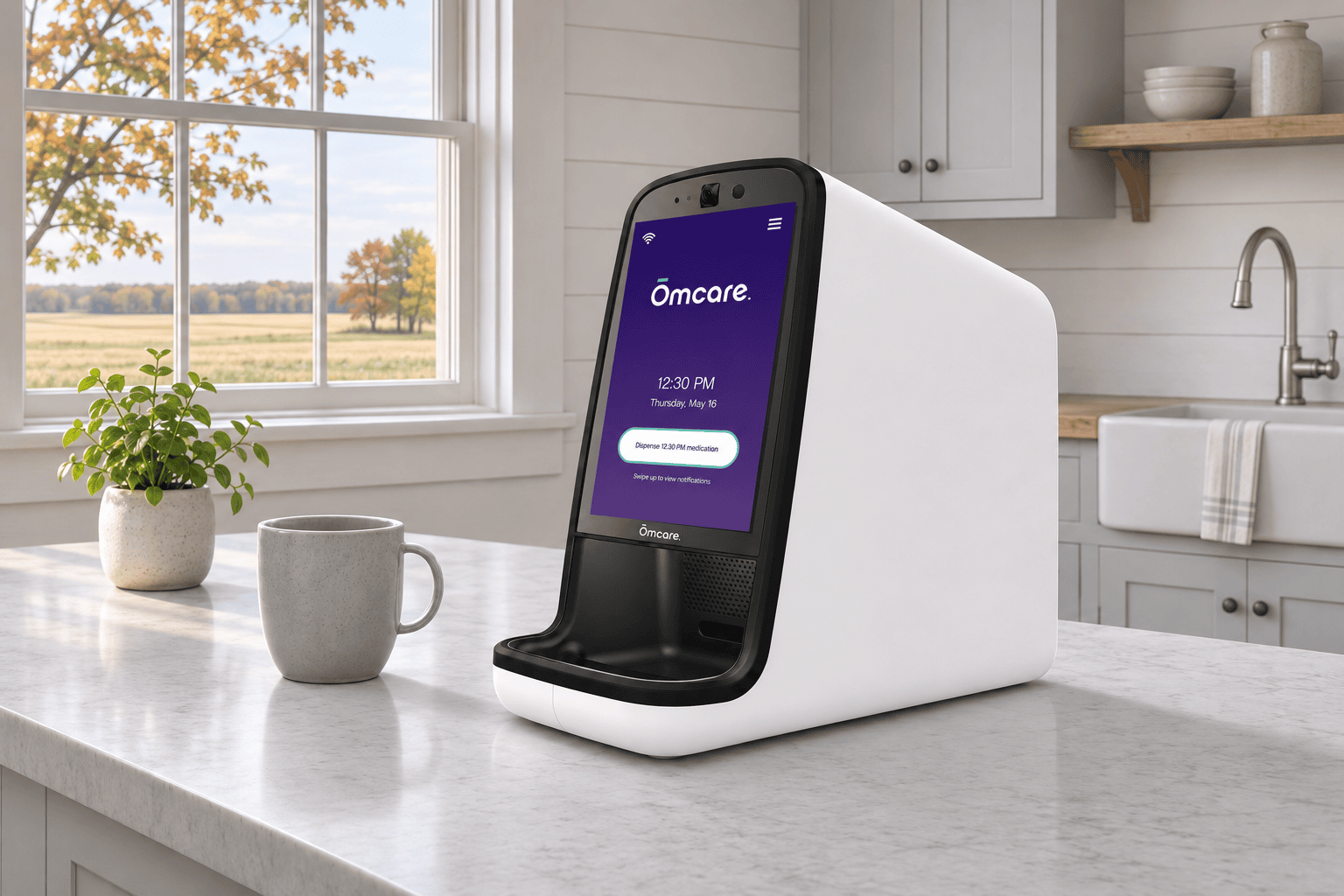
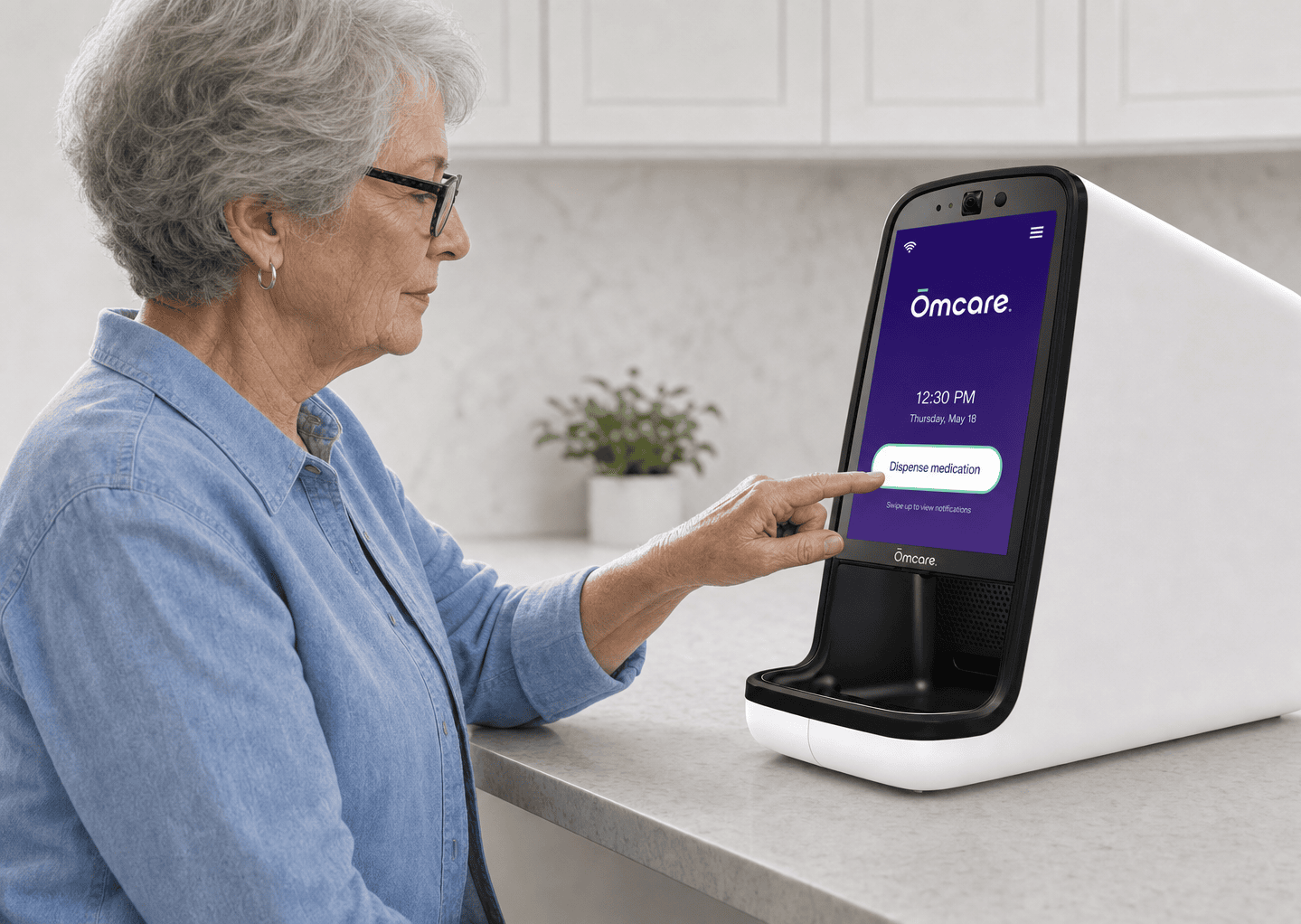
Omcare’s Home Health Hub is about the size of a coffee maker and dispenses medications, sent monthly by mail, along with alarms to notify patients when they are due to take their pills.
The hub has a two-way video screen that allows friends or relatives to monitor prescription sessions, and it interfaces with patients’ phones so they can call pharmacists any time they have questions.
Some elder-care facilities in the Twin Cities area have used the hub, but Omcare founder Lisa Lavin said she believes its untapped potential is in rural areas, especially the homes of older adults who live independently but don’t have pharmacies nearby. They can fall behind on vital prescriptions because it is difficult to pick up refills and struggle with side effects because they can’t get in touch with pharmacists to address them, Lavin said.
Read the full news article from The Minnesota Star Tribune here.
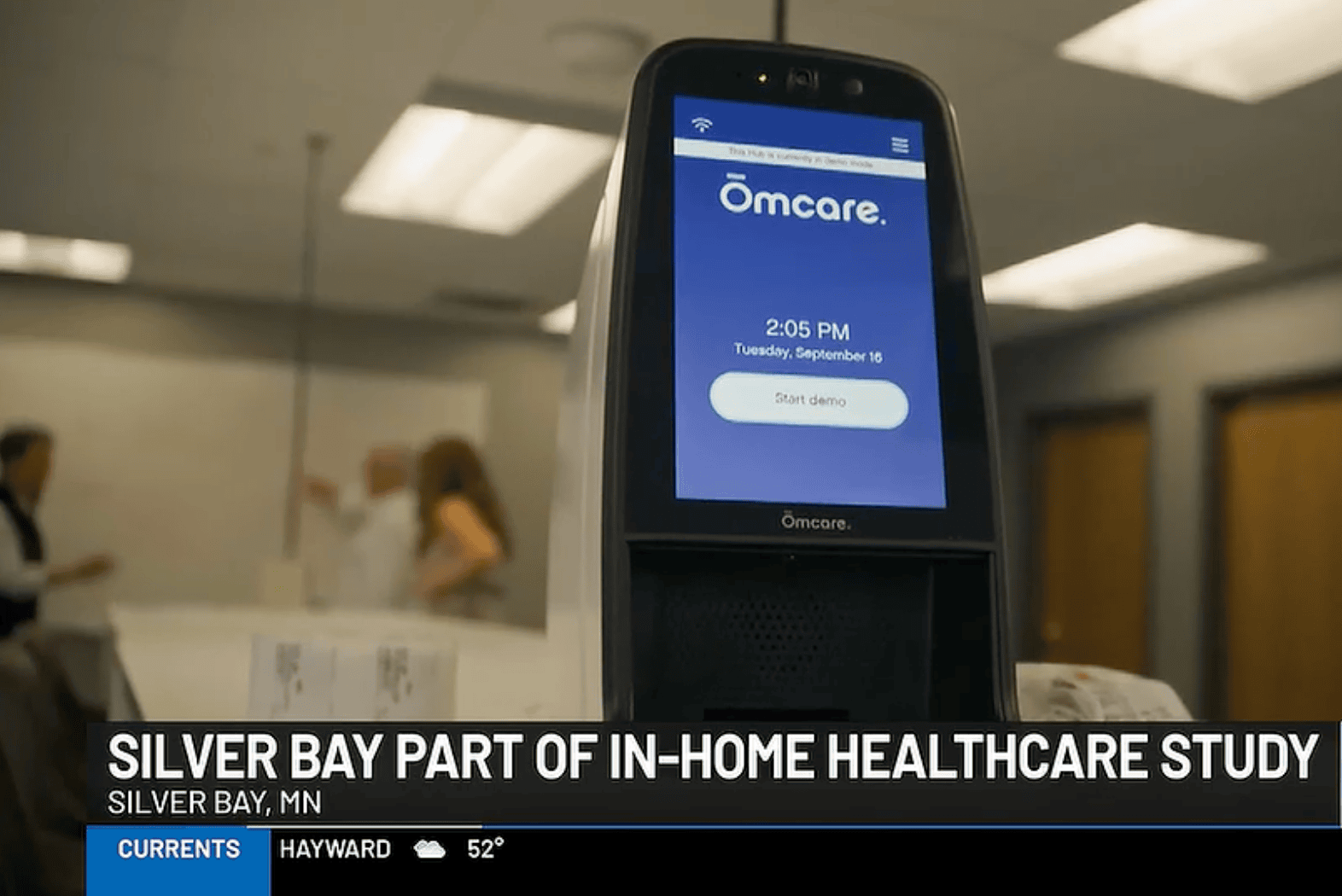
As clinic doors close, Silver Bay tests pharmacy care device at home for seniors
SILVER BAY, Minn. (Northern News Now) – Doors to Silver Bay’s only health care clinic will close in December — but for some residents, healthcare could soon come knocking at their front door.
With Aspirus Lake View coming up on their closing deadline, Silver Bay is joining a pilot program to bring pharmacy care into seniors’ homes — a test of whether tech can fill the gap for an aging city now facing extensive drives just for basic care.
Ōmcare is a Bloomington-based digital health company behind the Home Health Hub — now being piloted in Lanesboro and Silver Bay through the Rural Health Innovation study.
Ōmcare CEO Lisa Lavin said, “46% of all counties in the United States have at least one rural health desert, meaning that somebody has to drive in excess of 15 miles to be able to get access to care.”
Read the full news article from Northern News Now here.

Why medication adherence is bigger than a pill
Why Medication Adherence Is Bigger Than a Pill
By Lisa Lavin, Ōmcare founder and CEO
Healthcare has a tendency to measure what happens at the point of care.
Did a patient take their medication? Did the numbers improve? Did they avoid the hospital?
But some of the most important outcomes happen much farther downstream.
As poet Seamus Heaney described, “I have begun to think of life as a series of ripples widening out from an original center.”
That is what makes medication adherence so powerful. And so easy to underestimate.
I think about the children’s book If You Give a Mouse a Cookie. One small action sets off a chain reaction: give the mouse a cookie, and suddenly he needs a glass of milk, then a straw and so on…
Medication adherence can work the same way. Except the ripple isn’t a storybook chain, it’s a human one.
When an older adult takes the right medication, at the right dose, at the right time, consistently, the impact can extend far beyond that single dose.
Better medication management can help someone remain stable. Stability can mean fewer complications and avoidable hospitalizations. Fewer hospitalizations can mean fewer setbacks to strength, mobility and function.
And function is about much more than health.
- It is the ability to get out of a chair without help.
- To make your own breakfast.
- To walk into your own kitchen.
- To stay in the home you’ve lived in for decades.
- To remain connected to your community.
- To preserve a sense of independence and dignity.
For a family member, it can mean fewer late-night calls and fewer hours spent wondering whether Mom or Dad took the right medications.
For a caregiver, it can mean less time managing pill boxes and medication schedules and more time simply being a daughter or son, a spouse or a friend.
And in rural communities, where healthcare resources can be stretched thin and a trip to a specialist, clinic or hospital can mean significant distance, these ripples can matter even more. Keeping someone healthier and more stable at home isn’t just convenient; it can help bridge the distance between people and the care they need.
I believe this is where the future of healthcare is headed.
We cannot build a sustainable healthcare system around constantly reacting to crises. We need to move upstream and identify risk earlier, support people between appointments and give caregivers and care teams the tools to intervene before a manageable problem becomes an emergency.
Medication adherence is one of those upstream opportunities.
- When patients are more stable, clinicians have more capacity to focus on proactive care.
- When caregivers have better support, they can spend less time coordinating medications and more time caring for the person they love.
- When technology connects patients, caregivers and providers, care doesn’t have to stop when the appointment ends.
That is the opportunity in front of us: not simply to help people take their medications, but to use medication management as a gateway to a more proactive, connected model of care.
Technology should not replace human care; it should instead extend that care.
It should help a nurse see the signal before the crisis, a caregiver know that something has changed, an older adult remain confident in their own home and a rural patient stay connected to the healthcare system without every problem requiring a long drive or a hospital visit.
Ultimately, technology should give people more of what healthcare is supposed to protect: time, independence, dignity and the ability to live their lives on their own terms.
That’s why we at Ōmcare think differently about what we’re building.
We aren’t just solving for a missed dose; we’re solving for everything that can happen when the right dose isn’t missed.
The smallest intervention can sometimes create the largest ripple, and that ripple can begin with something remarkably simple:
- The right medication
- At the right dose
- At the right time
- Consistently
That is why we do what we do.
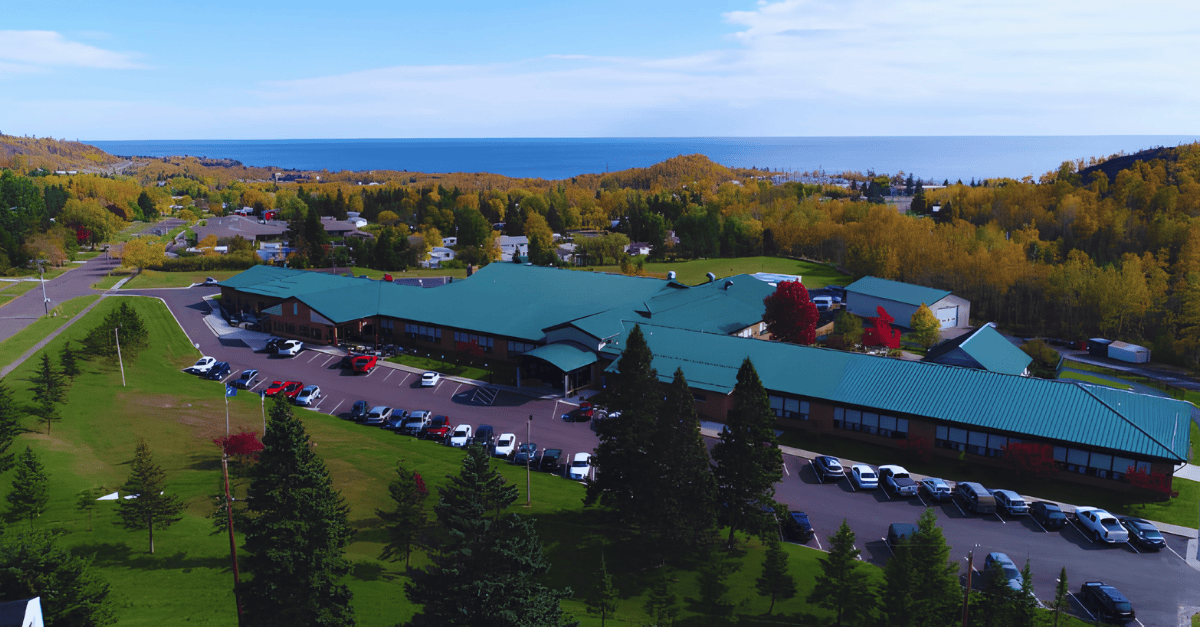
When the clinic closes, can in-home pharmacy help? Silver Bay, Minnesota is about to find out
On the crisp, sparkling shores of Lake Superior on Minnesota’s North Shore, Silver Bay is more than a city, it’s a lifestyle. About 1,800 people call it home, drawn by the views and the peace of small-town life.
But, like many rural communities across the country, Silver Bay has been losing vital healthcare access with residents facing increasing barriers to getting care.
The city’s only healthcare clinic is closing in December 2026 and nearly a third of residents are 65 or older. That’s exactly the population that feels a healthcare gap the most. The town’s only pharmacy is not open on weekends and residents will now need to transport at least 30 miles away for clinical and emergency services.
That has left many people wondering how they’ll be able to stay independent at home in Silver Bay.
Now Silver Bay is stepping up as the second Minnesota community to join the Rural Health Innovation Initiative, a six-month pilot led by the University of Minnesota Center for Healthy Aging and Innovation. The goal is to test the impact of pharmacy and care services delivered directly into people’s homes, no matter how far they live from the nearest pharmacy.
One countertop device opening a world of services
The centerpiece of the pilot is the Ōmcare Home Health Hub®, a compact in-home device that automatically sorts and dispenses medication in pre-timed packets whenever a person’s medication schedule calls for it. There’s no more guessing whether today’s pills were taken.
Beyond medication management, the Hub gives participants:
- A screen for video calls with family, friends and caregivers
- 24/7 phone access to pharmacy staff
- Monthly check-ins with a medication management team
It’s built to answer a simple but urgent question: can older adults get consistent, reliable care without living close to a pharmacy?
Local leadership sees an opportunity
Silver Bay Mayor Wade LeBlanc has been vocal about what this pilot could mean for the city’s future. As a small community working to support its aging population with a thinning healthcare infrastructure, he sees real potential in bringing this kind of innovation home. And he’s hoping it sticks around.
The city is already looking past the six-month pilot window, aiming to partner with Essentia Health to keep the service model in place for residents long-term.
The view from Ōmcare
This isn’t about any one device; it’s not technology for technology’s sake. This pilot is about communities people are committed to staying in, even with the erosion of the infrastructure that once supported them.
Silver Bay reflects exactly the kind of community the pilot was built for. It’s a town people love deeply, where they want to spend their entire lives, but where the healthcare system hasn’t kept pace.
For us, the pilot is a chance to test whether an in-home model can genuinely close that gap, not just patch it, to help residents stay healthy, independent and connected to the community they’ve chosen.
It’s easy to think of a medication management as a logistics problem to solve. But the connection achieved through check-ins with family, loved ones and caregivers is just as important. Isolation is as much a rural health risk as a missed medication dose, and worth designing for.
Why this matters beyond Silver Bay
Silver Bay isn’t an outlier. Rural clinics and pharmacies have been closing across Minnesota and the country for years. The communities left behind are disproportionately older. The Rural Health Innovation Initiative is explicitly designed to test whether the Ōmcare model can scale; not just as a stopgap for one North Shore city, but as a blueprint for rural communities nationwide facing the same erosion of local care.
The University of Minnesota Center for Healthy Aging and Innovation is leading the evaluation and tracking outcomes over the six-month pilot to understand how well the model supports aging in place. It’s all part of discovering what it will take to bring it to more towns like Silver Bay.
Is your community next?
If your rural community is watching its local healthcare options shrink, this pilot might be worth a conversation. Communities interested in bringing this kind of in-home medication management and care model to their own residents can reach out to the University of Minnesota study office to learn about participating in a future pilot.
Ready to explore what this could look like where you live? Contact Email: healthstudy@umn.edu
