
Seniors: Live where you choose, longer
Seniors: Live where you choose, longer
By Lisa Lavin, CEO
At Ōmcare, our mission is to help people over age 65 live where they want to live, longer. It’s in all our material and in conversations with clinicians and partners. It is central to everything we do.
But a phrase you repeat every day can quietly lose its meaning. So, I’ve been asking myself a simple question: What does living where you choose, longer, actually mean to the people living it?
Here’s where I’ve landed. It’s not a policy term, it’s just life.
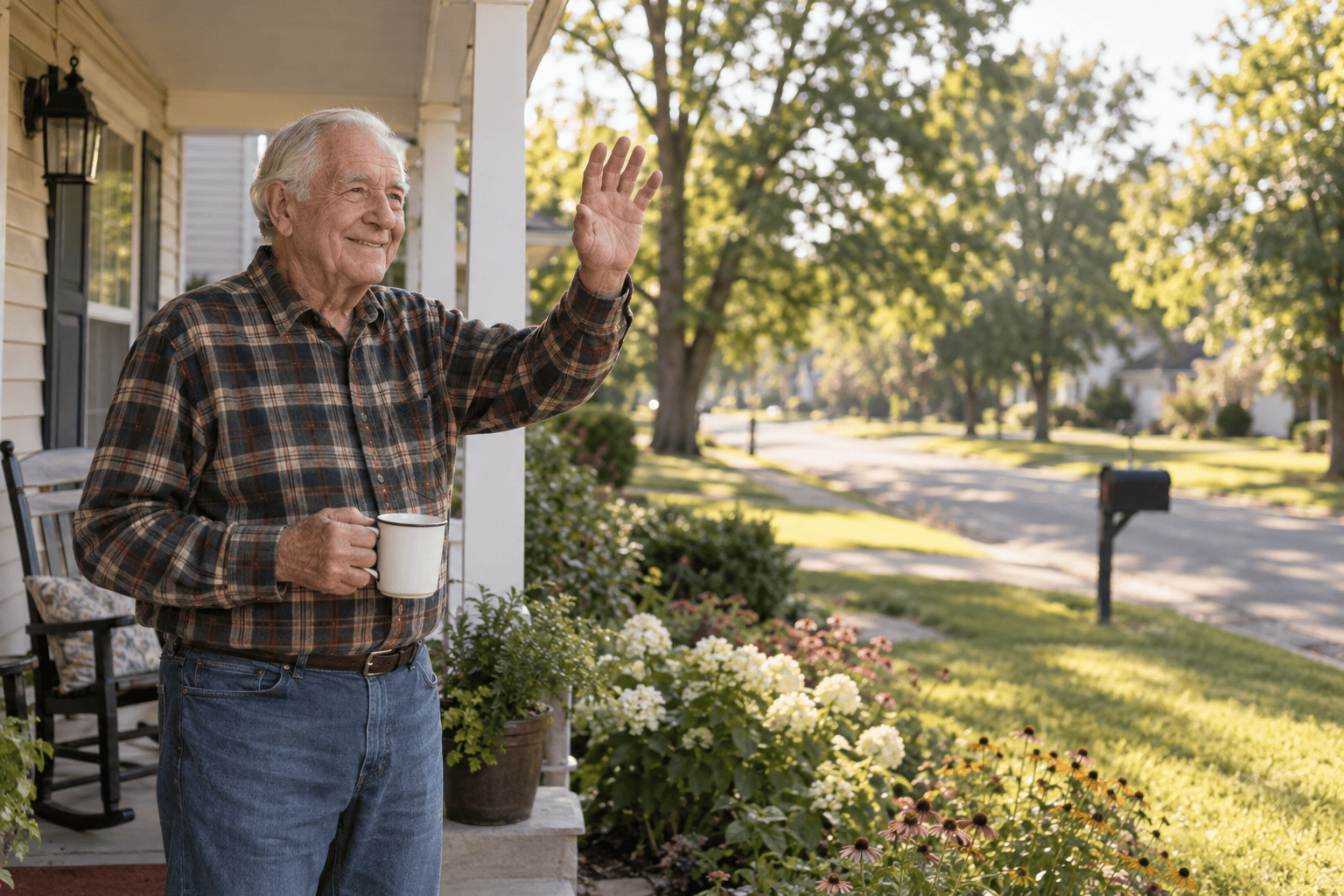
It’s the life someone has built and is continuing on their own terms. It’s their kitchen that they know by heart, the neighbor who waves from the porch each morning, the Tuesday coffee group and the garden that always needs tending. It is dignity, choice, routine, connection and independence, held together for as long as possible.
What people tell us they want
The desire to stay home isn’t a niche preference, it’s nearly universal.
At least 75% of adults 50 and older said they want to remain in their current home as long as possible, and 73% want to stay in their community, according to AARP’s 2024 Home and Community Preferences Survey.
That desire is even stronger among people age 65 and older and also for those living in small towns and rural areas,
But what jumps out at me most is the gap between someone wanting to remain in their home and being ready to actually do that. In that same survey, 43% said they’d need to modify their home to keep living there and 64% said they want a medical emergency response system.
People aren’t asking to be rescued, they’re just asking for a little help maintaining stability.
Five words that matter
When you ask people what living where they choose means to them, five motivations usually come up. And each one looks very different in a real home.
Dignity
A retired schoolteacher managing her own heart medications instead of having a stranger count pills into her hand. It’s being trusted with your own life.
Choice
The 84-year-old man who remains in his home, adapting it to his needs, rather than moving somewhere else. Good care bends to the person, not the other way around.
Routine
The morning coffee, the crossword and the daily walk to the mailbox. For many older adults, especially those living with early memory changes, routine isn’t just a habit. It’s the scaffolding that keeps the day standing.
Connection
The daughter three states away who gets a quiet reassurance that Mom took her medication, so their nightly call can be about the grandkids instead of a health checklist.
This is a big one. Social disconnection raises the risk of premature death to a level comparable to smoking up to 15 cigarettes a day, according to the U.S. Surgeon General’s 2023 advisory. That isolation among older adults drives an estimated $6.7 billion in excess Medicare spending every year.
Independence
The widow who can still live alone in her home because the smaller risks like a missed medication dose, a fall or a night when something feels off are covered by a safety net she barely notices.
Technology to support, not replace
Ōmcare focuses on medication adherence. Here’s why it matters:
Roughly half of patients with chronic conditions don’t take their medications as prescribed.
In the U.S., nonadherence is associated with about 125,000 deaths a year, at least 10% of hospitalizations and $100 billion to $300 billion in avoidable spending per year.
Physicians often treat medication nonadherence as a patient problem rather than a health-system problem, researchers have noted.
Behind those numbers are ordinary and very real moments.
A dose missed because the label was confusing.
A pill taken twice because yesterday blurred into today.
A refill missed because the pharmacy is 40 minutes away and the roads iced over.
Each one could be relatively small, but together, they are often the difference between staying home and moving out.
This is where technology can shine. It can offer a reminder that arrives at the right moment, a dispenser that makes the right dose easy and the wrong dose hard and a gentle alert to a family member or nurse when something is actually off.
Done well, none of this feels like surveillance, but more of a steady hand.
To be clear: Technology cannot and should not replace human care. A device can tell a nurse that a dose was missed, but it can’t ask why, notice the grief in someone’s voice or sit at the kitchen table and listen. The best health technology quietly helps people live the lives they already want, and it makes the humans in their lives more effective, not less necessary.
Rural America: where staying home is hardest
For anyone who needs a demonstration of what living where you choose truly asks of us, visit rural America. About 15% of Americans overall live in rural counties, but 22% of Americans over age 65 live in rural areas.
At the same time, the care around them is evaporating. Since 2010,182 rural hospitals have closed or stopped offering inpatient care. That is roughly 10% of the nation’s rural hospitals. Nearly half (46%) now run at a negative operating margin and at least 432 are considered vulnerable to closure.
For an older adult in a small town, that math is personal. It means a longer drive to a pharmacy and even further to get to a pharmacist who knows your name when they see you.
It means a home health nurse covering an entire county instead of a neighborhood and family caregivers stretched across distance and jobs. In these places, a missed dose or an unnoticed decline isn’t a minor event. It can be the first step toward permanently leaving home.
That’s exactly why rural communities are where thoughtful technology can do the most good. However, tools built for a city apartment with fast wi-fi and a clinic right down the block won’t always work reliably for a farmhouse at the end of a gravel road. Rural seniors deserve technology designed for their reality.
What policy can do next
We’re at a rare moment for rural health. The federal Rural Health Transformation Program is distributing $50 billion to all 50 states over five years, $10 billion a year from 2026 through 2030, with first-year awards ranging from $147 million to $281 million. Its stated goals include expanding access, strengthening the rural workforce and modernizing technology and care models. Provider groups have welcomed the funds while cautioning that they don’t offset projected Medicaid reductions in the same law.
How states spend this money will shape rural aging for a generation. At Ōmcare, we believe a few principles should guide it:
- Measure success by days at home. Fund programs by whether they help people stay safely in their own homes and communities, not only by the number of devices deployed or visits logged.
- Pay for the human-plus-technology model. Reimbursement should reward nurses, pharmacists and community health workers who use remote tools to reach more people, so technology extends caregivers rather than replacing them.
- Design for rural from the start. Require that funded tools work on limited broadband, are easy for people with low vision or arthritis to use and are tested with rural older adults themselves.
- Treat medication management as core care. Adherence support is one of the most direct, measurable ways to prevent avoidable hospitalizations. It should be centered in state plans, not on the margins.
- Support family caregivers. They are the backbone of helping people live where they choose. Give them training, respite and tools that reduce worry rather than add another app to check.
I believe industry leaders have a responsibility to bring what we see in real homes into policy conversations honestly and with older adults at the center of the table.
Back to the kitchen table
“Live where you choose, longer” is the phrase I’ll keep saying, because it names what the people we serve actually want. And I try to hear it the way they live it: as the morning coffee, the garden, the neighbor’s wave and the right to decide for yourself how your days unfold.
Our job in technology, in care and in policy isn’t to redesign lives. It’s to protect them, quietly, and for as long as possible. If we get that right, the best compliment our work can receive is that people barely notice it’s there.

This at-home pill dispenser could help fill rural Minnesota’s pharmacy gap
Bloomington-based startup Omcare is studying if the device helps keep older adults on their medication schedule.
A Bloomington startup is testing whether its interactive prescription drug dispenser can help older Minnesotans take their medications on schedule — especially in rural areas that lack pharmacies.
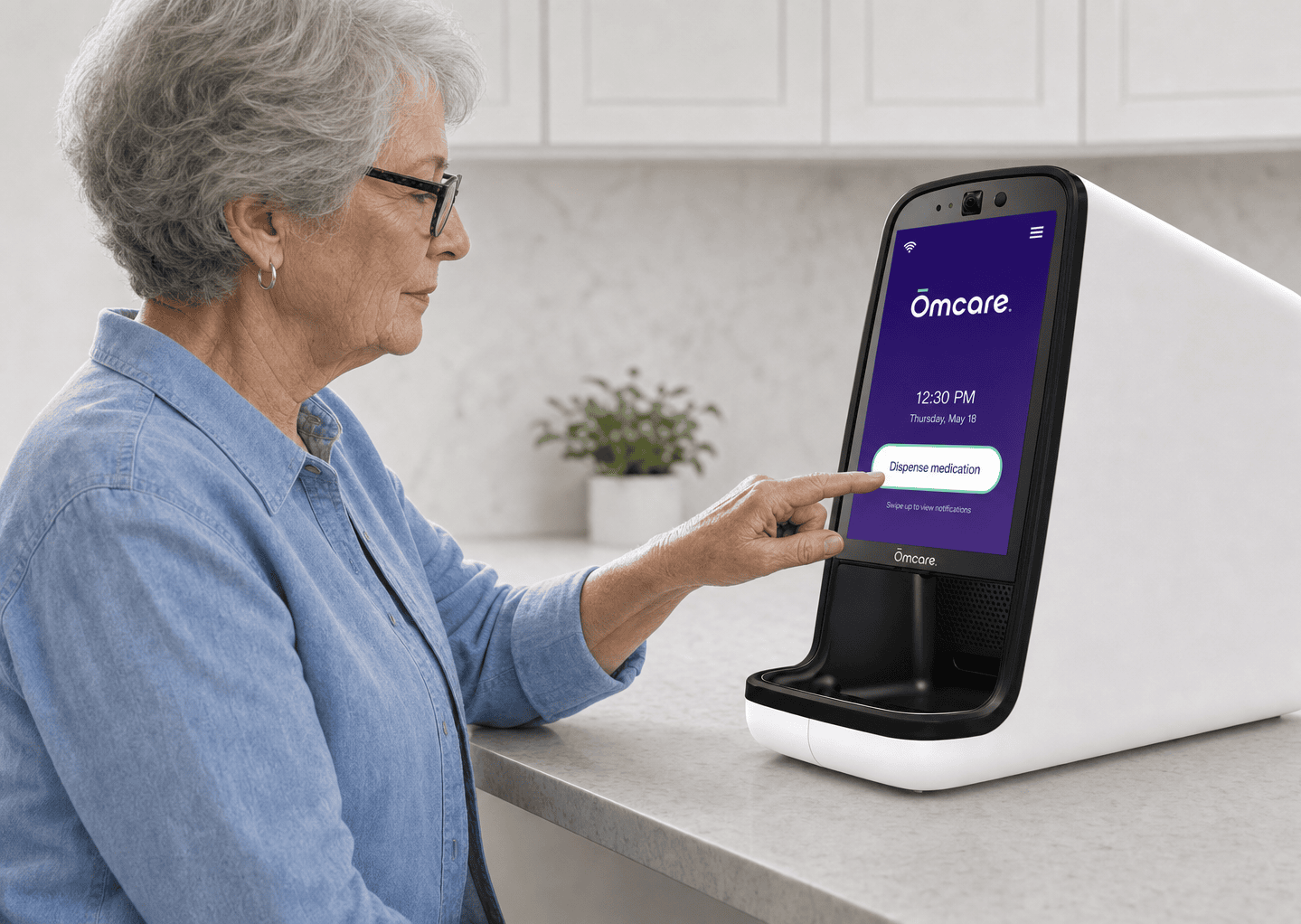
Omcare’s Home Health Hub is about the size of a coffee maker and dispenses medications, sent monthly by mail, along with alarms to notify patients when they are due to take their pills.
The hub has a two-way video screen that allows friends or relatives to monitor prescription sessions, and it interfaces with patients’ phones so they can call pharmacists any time they have questions.
Some elder-care facilities in the Twin Cities area have used the hub, but Omcare founder Lisa Lavin said she believes its untapped potential is in rural areas, especially the homes of older adults who live independently but don’t have pharmacies nearby. They can fall behind on vital prescriptions because it is difficult to pick up refills and struggle with side effects because they can’t get in touch with pharmacists to address them, Lavin said.
Read the full news article from The Minnesota Star Tribune here.
As clinic doors close, Silver Bay tests pharmacy care device at home for seniors
SILVER BAY, Minn. (Northern News Now) – Doors to Silver Bay’s only health care clinic will close in December — but for some residents, healthcare could soon come knocking at their front door.
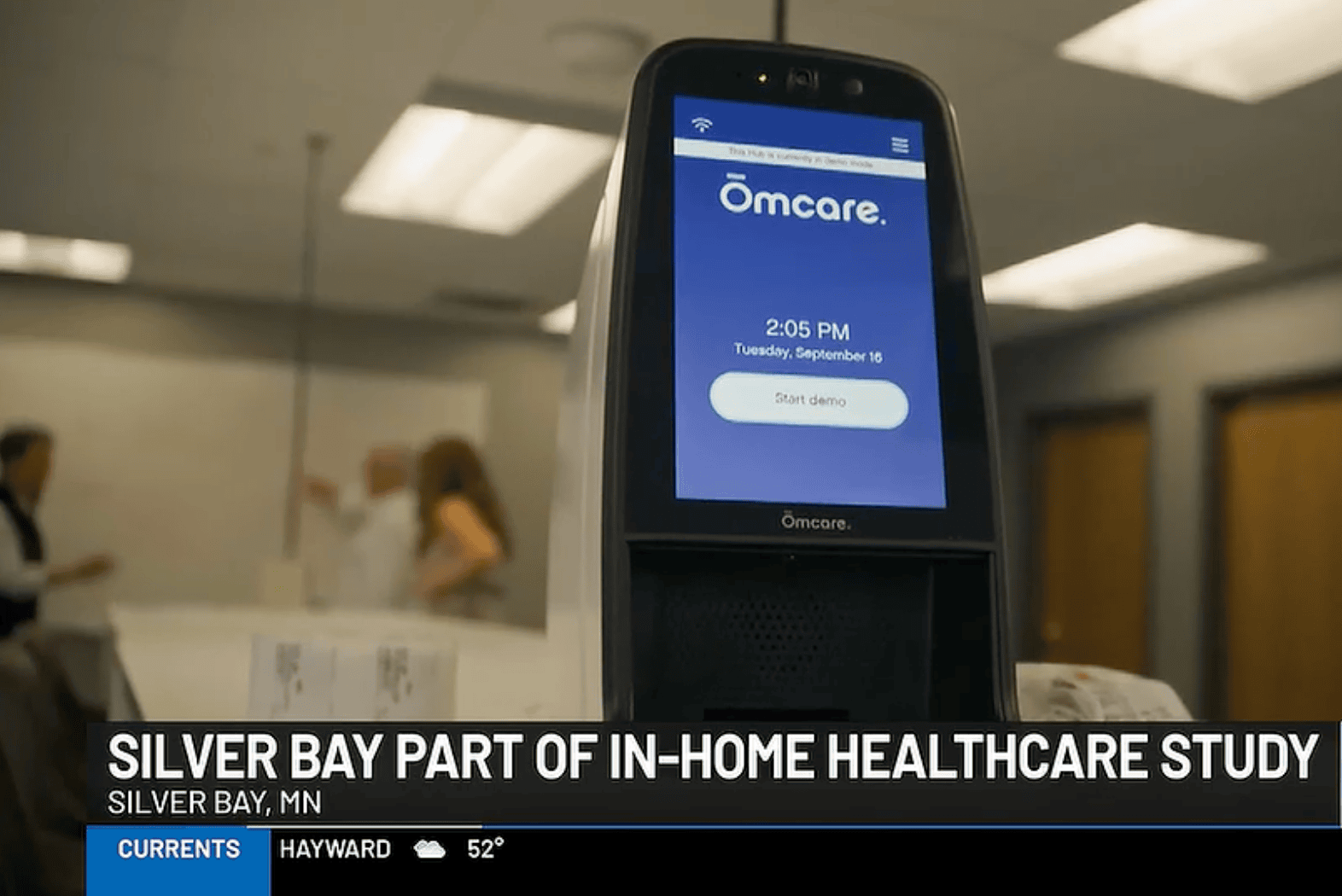
With Aspirus Lake View coming up on their closing deadline, Silver Bay is joining a pilot program to bring pharmacy care into seniors’ homes — a test of whether tech can fill the gap for an aging city now facing extensive drives just for basic care.
Ōmcare is a Bloomington-based digital health company behind the Home Health Hub — now being piloted in Lanesboro and Silver Bay through the Rural Health Innovation study.
Ōmcare CEO Lisa Lavin said, “46% of all counties in the United States have at least one rural health desert, meaning that somebody has to drive in excess of 15 miles to be able to get access to care.”
Read the full news article from Northern News Now here.

Why medication adherence is bigger than a pill
Why Medication Adherence Is Bigger Than a Pill
By Lisa Lavin, Ōmcare founder and CEO
Healthcare has a tendency to measure what happens at the point of care.
Did a patient take their medication? Did the numbers improve? Did they avoid the hospital?
But some of the most important outcomes happen much farther downstream.
As poet Seamus Heaney described, “I have begun to think of life as a series of ripples widening out from an original center.”
That is what makes medication adherence so powerful. And so easy to underestimate.
I think about the children’s book If You Give a Mouse a Cookie. One small action sets off a chain reaction: give the mouse a cookie, and suddenly he needs a glass of milk, then a straw and so on…
Medication adherence can work the same way. Except the ripple isn’t a storybook chain, it’s a human one.
When an older adult takes the right medication, at the right dose, at the right time, consistently, the impact can extend far beyond that single dose.
Better medication management can help someone remain stable. Stability can mean fewer complications and avoidable hospitalizations. Fewer hospitalizations can mean fewer setbacks to strength, mobility and function.
And function is about much more than health.
- It is the ability to get out of a chair without help.
- To make your own breakfast.
- To walk into your own kitchen.
- To stay in the home you’ve lived in for decades.
- To remain connected to your community.
- To preserve a sense of independence and dignity.
For a family member, it can mean fewer late-night calls and fewer hours spent wondering whether Mom or Dad took the right medications.
For a caregiver, it can mean less time managing pill boxes and medication schedules and more time simply being a daughter or son, a spouse or a friend.
And in rural communities, where healthcare resources can be stretched thin and a trip to a specialist, clinic or hospital can mean significant distance, these ripples can matter even more. Keeping someone healthier and more stable at home isn’t just convenient; it can help bridge the distance between people and the care they need.
I believe this is where the future of healthcare is headed.
We cannot build a sustainable healthcare system around constantly reacting to crises. We need to move upstream and identify risk earlier, support people between appointments and give caregivers and care teams the tools to intervene before a manageable problem becomes an emergency.
Medication adherence is one of those upstream opportunities.
- When patients are more stable, clinicians have more capacity to focus on proactive care.
- When caregivers have better support, they can spend less time coordinating medications and more time caring for the person they love.
- When technology connects patients, caregivers and providers, care doesn’t have to stop when the appointment ends.
That is the opportunity in front of us: not simply to help people take their medications, but to use medication management as a gateway to a more proactive, connected model of care.
Technology should not replace human care; it should instead extend that care.
It should help a nurse see the signal before the crisis, a caregiver know that something has changed, an older adult remain confident in their own home and a rural patient stay connected to the healthcare system without every problem requiring a long drive or a hospital visit.
Ultimately, technology should give people more of what healthcare is supposed to protect: time, independence, dignity and the ability to live their lives on their own terms.
That’s why we at Ōmcare think differently about what we’re building.
We aren’t just solving for a missed dose; we’re solving for everything that can happen when the right dose isn’t missed.
The smallest intervention can sometimes create the largest ripple, and that ripple can begin with something remarkably simple:
- The right medication
- At the right dose
- At the right time
- Consistently
That is why we do what we do.

Silver Bay, Minnesota Joins Rural Health Innovation Study
FOR IMMEDIATE RELEASE
Silver Bay, Minnesota Joins Rural Health Innovation Study
City becomes second Minnesota community to test in-home pharmacy and care model addressing rural healthcare access
BLOOMINGTON, Minn. / SILVER BAY, Minn. (September 9, 2026) — Ōmcare and the City of Silver Bay are proud to announce that Silver Bay, Minnesota will join the Rural Health Innovation study, a six-month initiative led by the University of Minnesota Center for Healthy Aging & Innovation designed to bring pharmacy and care services directly into the homes of older adults in rural communities.
Silver Bay, a city of roughly 1,800 residents on Minnesota’s North Shore, has faced a shrinking local healthcare footprint in recent years, including the closure of its local clinic. Nearly a third of the city’s residents are 65 or older, a population especially affected when local health and human services scale back. Rural communities across Minnesota and the country have experienced similar losses, leaving residents to travel much farther for basic care and medication access.
The project gives residents of Silver Bay a small device, about the size of a large bagel toaster, called the Ōmcare Home Health Hub®. The Hub helps residents (and their families) by offering automated medication scheduling and dispensing. The Ōmcare Hub dispenses a little packet holding the medication you need to take at 8, at 12, at 6 – whatever time of day you need it. It also includes a screen for video calls to family and friends, 24/7 phone access to pharmacy staff, and once-a-month pharmacy check-ins. The goal is to demonstrate that older adults in rural communities can access consistent, reliable pharmacy and care services regardless of their distance from a physical pharmacy.
As a small city working to support an aging population with limited local healthcare infrastructure, we see real value in this kind of innovation reaching our residents,” said Mayor Wade LeBlanc of Silver Bay. “We’re glad to help connect the study team with local residents, community organizations, and other local partners as the pilot gets underway. Our goal is to prove this model extends access to care, and to partner with Essentia Health to continue this new service model for our community long after the pilot ends.”
“Silver Bay reflects exactly the kind of community this study was built for: one that loves where it lives, but is losing the healthcare infrastructure to support aging in place,” said Lisa Lavin, CEO of Ōmcare. “Bringing this model to Silver Bay lets us test whether in-home pharmacy and care can help fill that gap and keep residents healthy, independent, and connected to their community.”
About the Rural Health Innovation Initiative
The Rural Health Innovation Initiative is a six-month pilot study evaluating a scalable model for remote pharmacy access and in-home care in rural communities. The University of Minnesota Center for Healthy Aging & Innovation is leading the pilot evaluation, assessing outcomes associated with the Ōmcare Home Health Hub® and the model’s potential for broader adoption in rural communities nationwide.
Interested in participating?
Contact the University of Minnesota study office:
Email: healthstudy@umn.edu
Phone: 612-626-4816
Sign up: https://redcap.link/ruralhealth
About the City of Silver Bay
The mission of the City of Silver Bay is to make Silver Bay a great place to live, work, and visit by providing cost-effective government and services to improve the lives of those it serves.
About Ōmcare
Ōmcare is a digital health company Changing the way the world cares® by integrating technology with pharmacy and care services to help older adults live where they want to live, longer. Ōmcare enables a more efficient, tech-enabled care delivery model that addresses workforce shortages and serves as the last mile of pharmacy into the home, ensuring the right medication is taken at the right time. To learn more, visit https://omcare.com/.
Media contact
J. Marie Fieger
612-940-1668
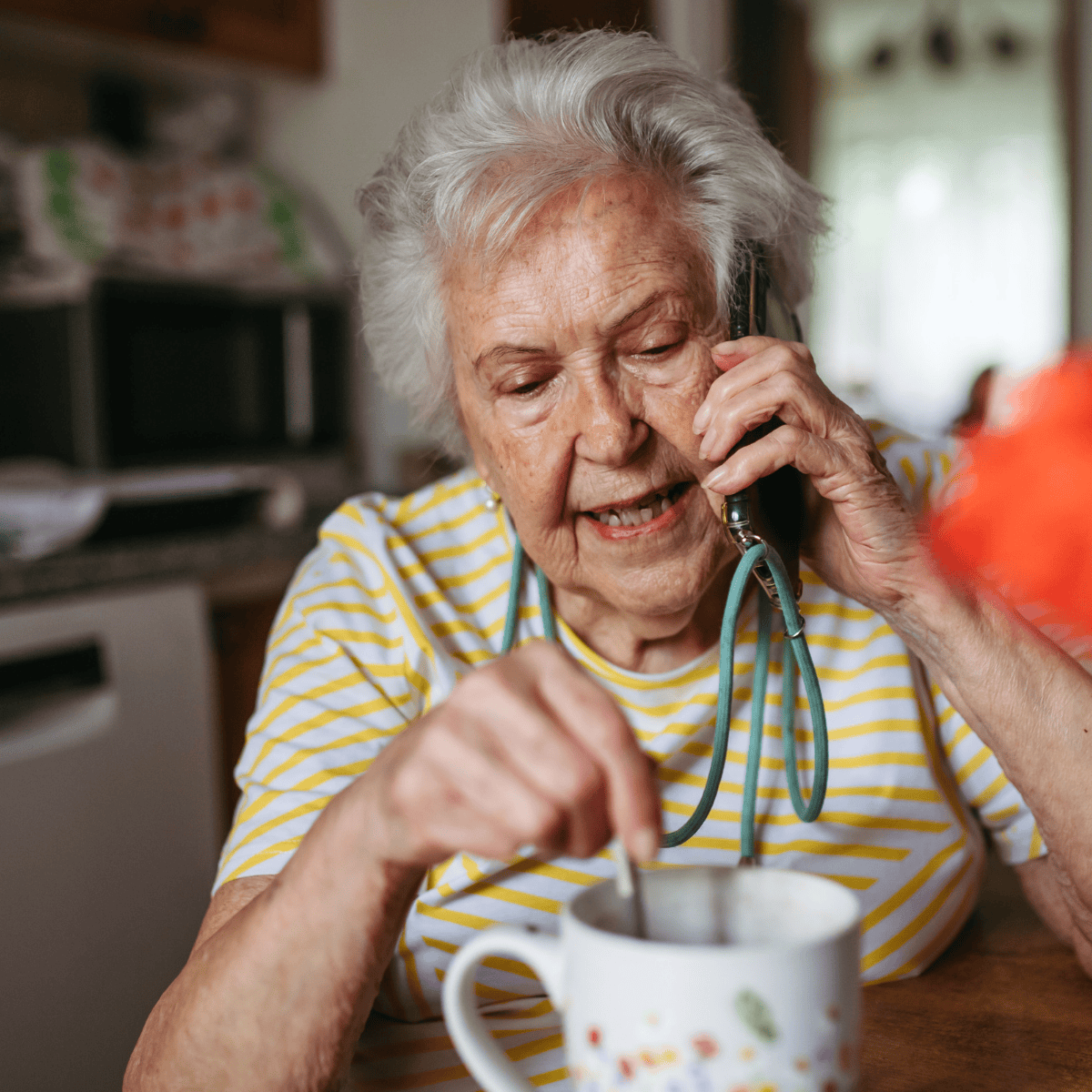
Experiencing one life
by Lisa Lavin, CEO, Ōmcare
Care for older adults was built around systems, not really around the realities of how individuals and their caregivers actually live. Not only can those realities change for people, as the older adult population grows, caregiver capacity shrinks, healthcare costs rise and people live longer with multiple chronic conditions … doing more of the same thing isn’t enough.
Older adults don’t experience healthcare as a collection of systems
Every time an older adult interacts with:
- Primary care providers
- Specialists
- One or more pharmacies
- Home health providers
- Hospitals
- Insurance companies
- Transportation services
- Family caregivers
They encounter different processes and priorities.
Seen from 10,000 feet, these are collections of systems, but adults ages 65+ are experiencing one life.
If those systems aren’t connected or aren’t willing to try new approaches, the burden of coordinating everything falls on the individual or their family caregiver. That’s especially problematic when someone is managing multiple medications, appointments, diagnoses, mobility challenges and/or cognitive changes.
Instead of expecting older adults and caregivers to continually navigate these systems, we have the opportunity to bring support closer to the person’s actual day-to-day life.
Keeping people at home needs to be more than just a slogan
Most care organizations want the same outcome: help people remain independent and healthy in their homes for as long as possible.
But achieving that requires asking a different question: What does this person need between healthcare visits to actually make that possible?
- A 15-minute visit with a physician
- The every day routine of a family caregiver managing medications
- 8:00pm on a Sunday when someone is struggling to remember if they took their medications on time
- A brief home care visit where a care worker sees warning signs
In that space between those experiences there is enormous opportunity.
Technology, remote monitoring, medication management, community services, home-based care and new models of caregiver support can help fill those gaps.
Crisis prevention is better than crisis management
When something goes wrong, our healthcare systems are very good at responding. But for adults over age 65, relatively small problems can quickly become big.
One missed pill, dehydration, an untreated infection, a fall or a caregiver becoming overwhelmed can quickly result in an ER visit or hospitalization.
Technology and willingness to innovate gives organizations more opportunities to identify problems earlier and to intervene before they become crises.
That’s not just better healthcare, it’s better quality of life. And often less expensive than repeatedly treating preventable complications.
It’s time to embrace familial caregivers as an official and vital part of the care team
Family caregivers are often doing an enormous amount of invisible healthcare work.
- Organizing medications
- Driving to appointments
- Communicating with providers
- Watching for changes
- Managing meals
- Coordinating services
- Calibrating whether something is “normal” or if they should call in higher level assistance.
If organizations design care without considering the caregiver, they’re leaving out a huge and vital piece of the care puzzle.
Meeting older adults where they are also means meeting caregivers where they are. This can mean:
- Providing better and more clear information
- Reducing coordination burdens
- Providing tools that give them confidence that something has been completed and correctly
- Allowing technology to extend the reach of already-overstretched professionals
Innovation doesn’t have to mean throwing everything out and starting over
Being open to innovation doesn’t mean abandoning proven practices or adopting every shiny new technology. It means being willing to ask:
“Is there a better way to accomplish the outcome we’re already trying to achieve?”
Sometimes the answer will be no. Sometimes an existing process is genuinely the best one.
But organizations can become so accustomed to how something has always been done that the process accidentally becomes confused with the goal.

There doesn’t need to be a solo solution
Organizations: You don’t have to solve every problem internally.
Service organizations, health systems, home care agencies, pharmacies, technology companies, community organizations and caregivers are all unique pieces of the puzzle.
The strategy that benefits everyone is willingness to collaborate and let others bring new capabilities into the ecosystem.
The question doesn’t have to be: “Is this our solution?”
It can be: “Does this help our older adults and their caregivers achieve the outcome we’re all working toward?”
In fact, that’s a much more productive way to think about innovation.
The bigger idea
Ultimately, innovation in older adult care isn’t just about technology, it’s about willingness to change the way we all deliver support when the old way isn’t working well enough.
Older adults deserve care that fits into their lives rather than contorting their lives to fit into the healthcare system. Caregivers deserve support that recognizes the enormous role they’re already playing. And healthcare and older adult-service organizations need enough flexibility to experiment, collaborate and adopt new approaches when those approaches can improve outcomes.
The organizations that are willing to do that aren’t abandoning the system. They’re protecting its purpose.
The goal we’re all working toward? Helping older adults live healthier, safer and more independent lives at home. With this in mind, being open to new ideas should not be seen as a disruption of the mission, it’s all in how the mission is fulfilled.
If your organization is ready to reduce hospital readmissions and improve medication adherence rates, let’s explore a partnership.
